
Our law practice is statewide and helps people get proper compensation after a car accident or serious injury, defend themselves against criminal allegations, and protect their most important assets as they go through bankruptcy. View our Practice Area page to find out more about how we can help you. We take pride in serving all people throughout West Virginia with professional but aggressive advocacy.
 Personal Injury
Lives are turned upside down every day because of injuries resulting from the carelessness and negligence of others. These injuries occur almost everywhere, can have long-lasting consequences, and are often easily preventable. If you have been seriously injured in West Virginia, we can fight for your right to compensation and justice for the losses that you've suffered.
 Criminal Defense
No matter what walk of life you come from, a criminal allegation can have an immeasurable impact on you and your loved ones. At the Nestor Law Office, we understand the hardships that families must deal with when someone is accused of a crime in West Virginia. We fight to protect your rights, defend you in court, and always act with the best interests of you and your family in mind.
 Bankruptcy
Overwhelming debt can turn everyday life into a nightmare. While bankruptcy may be the best option for you, there are many different ways to stop debt collection and retain your home and assets. If you are considering filing for bankruptcy in West Virginia, we can tell you which of your debts could be discharged in bankruptcy and explore other options to ensure that you keep what is most important.
 Criminal Conviction Expungements
West Virginia Code 61-11-26 allows for the expungement of certain types of felony and misdemeanor convictions.
 Insurance Disputes
West Virginia law prescribes specific statutes of limitations for bringing actions based on tort injuries, which vary depending on the nature of the injury, the type of conduct, and the identity of the defendants. If a plaintiff successfully establishes liability, West Virginia statutes outline distinct categories of damages and factors that triers of fact must consider when awarding compensation.
Statutes of Limitations for West Virginia Tort Actions
General Tort Actions, Personal Injuries, and Property Damage
Under West Virginia's general statute of limitations for personal actions, the filing deadline depends on the category of the claim:
- Personal Injuries: Actions seeking damages for personal injuries must be commenced within two years next after the right to bring the action accrues . W. Va. Code § 55-2-12, Harmon v. Higgins, 188 W. Va. 709 (1992).
- Property Damage: Actions for damage to property must be brought within two years next after the right to bring the action accrues . W. Va. Code § 55-2-12, Handley v. Shinnston, 169 W. Va. 617 (1982).
- Other Personal Actions: A one-year limitation period applies to "any other matter of such nature that, in case a party die, it could not have been brought at common law by or against his personal representative" . W. Va. Code § 55-2-12. If a cause of action is governed by this one-year category, the one-year limitation applies regardless of the specific type of damages sought by the plaintiff . Duffy v. Ogden Newspapers, 170 W. Va. 318 (1982).
Medical Professional Liability
Statutes of limitations governing medical malpractice and professional liability are strictly regulated based on the class of the healthcare defendant:
- Standard Healthcare Providers: Actions against healthcare providers (excluding nursing homes, assisted living facilities, their related entities/employees, or distinct skilled nursing units of acute care hospitals) must be brought within two years of the date of the medical injury or death, or within two years of the date the injury is or should have been discovered through reasonable diligence . W. Va. Code § 55-7B-4. However, a strict 10-year statute of repose applies, preventing any action from being commenced more than 10 years after the date of the medical injury . W. Va. Code § 55-7B-4.
- Nursing Homes and Assisted Living Facilities: Actions alleging medical professional liability against a nursing home, assisted living facility, their related entities or employees, or a distinct intermediate/skilled nursing unit of an acute care hospital must be commenced within one year of the injury or death, or within one year of the date the injury was or should have been discovered through reasonable diligence, subject to the same 10-year maximum statute of repose . W. Va. Code § 55-7B-4.
- Injuries to Minors Under Age 10: If the medical injury was inflicted upon a minor who was under the age of 10 at the time, the action must be commenced within two years of the injury, or prior to the minor's 12th birthday, whichever provides the longer period . W. Va. Code § 55-7B-4.
Wrongful Death Actions
An action for wrongful death must be commenced within two years after the death of the deceased individual . W. Va. Code § 55-7-6, Bradshaw v. Soulsby, 210 W. Va. 682 (2001).
Accrual, Tolling, and the Discovery Rule
Accrual and the Discovery Rule
Ordinarily, a tort statute of limitations begins to run when the injury is inflicted and the right to bring the action accrues . Harmon v. Higgins, 188 W. Va. 709 (1992), Handley v. Shinnston, 169 W. Va. 617 (1982). However, West Virginia recognizes the "discovery rule," which tolls the limitation period until the plaintiff knows, or by the exercise of reasonable diligence should know:
- That they have been injured ; Goodwin v. Bayer Corp., 218 W. Va. 215 (2005), W. Va. ex rel. Chemtall, Inc. v. Madden, 216 W. Va. 443 (2004).
- The identity of the entity who owed them a duty of care and who may have breached that duty ; Goodwin v. Bayer Corp., 218 W. Va. 215 (2005). and
- That the conduct of that entity has a causal relationship to the injury . Goodwin v. Bayer Corp., 218 W. Va. 215 (2005).
In the context of products liability actions (civil actions brought against a manufacturer or seller based on strict liability in tort for personal injury, death, or property damage) , W. Va. Code § 55-7-31. the discovery rule tolls the statute until the plaintiff knows or should know:
- That they have been injured ; Goodwin v. Bayer Corp., 218 W. Va. 215 (2005), W. Va. ex rel. Chemtall, Inc. v. Madden, 216 W. Va. 443 (2004).
- The identity of the maker of the product ; Goodwin v. Bayer Corp., 218 W. Va. 215 (2005), W. Va. ex rel. Chemtall, Inc. v. Madden, 216 W. Va. 443 (2004). and
- That the product had a causal relation to the injury . Goodwin v. Bayer Corp., 218 W. Va. 215 (2005), W. Va. ex rel. Chemtall, Inc. v. Madden, 216 W. Va. 443 (2004).
Additionally, under the discovery rule for standard medical malpractice claims, the limitation period does not run until the plaintiff knows, or has reason to know, of the malpractice . Renner v. Asli, 167 W. Va. 532 (1981). The precise timing of when a plaintiff acquired sufficient knowledge to trigger the statute is generally a question of fact for the jury . Renner v. Asli, 167 W. Va. 532 (1981).
Continuing Torts
Where a tort involves a continuing or repeated injury (such as progressive property damage), the cause of action does not accrue all at once; rather, the limitations period begins to run from the date of the last injury, or when the tortious overt acts cease . Handley v. Shinnston, 169 W. Va. 617 (1982).
Tolling and Statutory Exceptions
- Fraud or Collusion in Medical Liability: The limitations periods for medical professional liability are tolled for any period during which the healthcare provider or its representative committed fraud or collusion by concealing or misrepresenting material facts regarding the injury . W. Va. Code § 55-7B-4.
- Mediation and Pre-Suit Notice: In medical malpractice actions, the statutory pre-suit mediation process impacts timing. However, the failure of a defendant healthcare provider to explicitly decline pre-suit mediation does not equitably toll the statute of limitations beyond the prescribed limits; once the response window expires, the plaintiff's 30-day clock to file suit begins to run . Adkins v. Clark, 247 W. Va. 128 (2022).
- Wrongful Death Strictness: Unlike general torts, the wrongful death statute does not allow extensions of the two-year filing period, and the discovery rule has historically been rejected as a method to extend this specific limitations window . Miller v. Romero, 186 W. Va. 523 (1991).
- Fraud or Mistake: The right to recover money paid under fraud or mistake accrues at the time the fraud or mistake is discovered, or through due diligence ought to have been discovered . W. Va. Code § 55-2-7.
Factors Considered in Awarding Compensation
West Virginia law identifies specific elements and instructions for calculating damages depending on the successful cause of action:
Wrongful Death Damages
If a plaintiff is successful in a wrongful death action, the jury (or the court in a bench trial) may award damages that "seem fair and just" . W. Va. Code § 55-7-6. The verdict must separately set forth and include compensation for the following categories:
- Sorrow, Mental Anguish, and Solace: This encompasses loss of society, companionship, comfort, guidance, advice, and kindly offices of the decedent . W. Va. Code § 55-7-6.
- Loss of Income and Services: Compensation for the reasonably expected loss of the decedent's income, as well as the loss of services, protection, care, and assistance they provided . W. Va. Code § 55-7-6.
- Medical Expenses: Expenses incurred for the care, treatment, and hospitalization of the decedent incident to the injury that resulted in death . W. Va. Code § 55-7-6.
- Funeral Expenses: All reasonable funeral expenses . W. Va. Code § 55-7-6.
The personal representative must expend any damages recovered specifically for medical and funeral expenses directly to satisfy those costs . W. Va. Code § 55-7-6. The remaining damages are distributed by the jury, or the court, in fair proportions to the surviving spouse, children (including stepchildren and adopted children), siblings, parents, and any other individuals who were financially dependent on the decedent or equitably entitled to share in the distribution . W. Va. Code § 55-7-6.
General and Property Damages
In general tort actions for property damage, compensation is tied to the injury inflicted . Handley v. Shinnston, 169 W. Va. 617 (1982). In continuing tort property claims, courts permit recovery for ongoing and progressive damage up until the tortious act ceases, ensuring plaintiffs are fully compensated for the cumulative harm . Handley v. Shinnston, 169 W. Va. 617 (1982).
Conclusion
In conclusion, West Virginia enforces a strict procedural framework for tort actions, generally applying a two-year limitations period for personal injury, property damage, and wrongful death claims, while reserving a one-year period for other non-surviving personal actions and nursing home malpractice. Except where restricted, such as in wrongful death claims, the discovery rule may toll these limits until a plaintiff discovers the injury, the tortfeasor's identity, and causation. When liability is established, West Virginia law mandates that compensation, particularly in wrongful death actions, be distributed to cover both tangible economic losses—such as medical expenses, lost income, and funeral costs—and intangible non-economic losses, including sorrow, mental anguish, and loss of companionship.
 Insurance Issues and Insurance Bad Faith in West Virginia - Statewide
West Virginia Insurance Bad Faith: When Your Own Insurance Company Refuses to Treat You Fairly
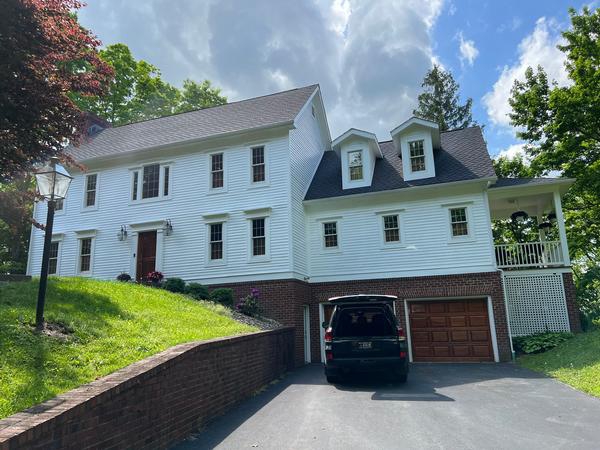
When you buy insurance, you are not simply buying a piece of paper. You are paying for a promise: if a covered loss occurs, your insurance company will honor the policy and deal with your claim fairly.
Unfortunately, some policyholders discover the real meaning of that promise only after a serious loss—a devastating house fire, a major automobile or truck accident, destruction of a UTV or other recreational vehicle, or another event for which they have faithfully paid insurance premiums.
When an insurance company unreasonably delays, undervalues, investigates unfairly, or refuses to pay a covered claim, West Virginia law provides important protections. In appropriate circumstances, an insured may have not only a breach-of-contract claim, but also a common-law bad-faith/Hayseeds claim and/or a statutory bad-faith claim under the West Virginia Unfair Trade Practices Act (UTPA), W. Va. Code § 33-11-4(9).
That distinction is important. So is acting quickly.
What is insurance bad faith in West Virginia?
West Virginia recognizes two important forms of protection for an insured dealing with his or her own insurance company:
- Contractual/common-law bad faith, developed through decisions such as Hayseeds, Inc. v. State Farm Fire & Casualty Co.; and
- Statutory bad faith, arising from the unfair claims-settlement provisions of W. Va. Code § 33-11-4(9).
These doctrines overlap in some circumstances, but they are not the same cause of action and have different requirements.
1. Contractual/common-law bad faith: the Hayseeds doctrine
West Virginia's Supreme Court established a particularly important rule in Hayseeds, Inc. v. State Farm Fire & Casualty Co., 177 W. Va. 323, 352 S.E.2d 73 (1986).
The case involved a fire that destroyed insured property. The Supreme Court held that when a policyholder substantially prevails in a property-damage action against the insurer, the insurer can be responsible for:
- reasonable attorney fees incurred in obtaining the insurance benefits;
- net economic loss caused by the delay in payment; and
- damages for aggravation and inconvenience.
The Court explained the fundamental reason for the rule: when someone buys insurance, the insured is buying insurance—not unnecessary, expensive litigation merely to force the insurer to honor its contractual obligation.
Importantly, a policyholder does not necessarily have to prove traditional "bad faith" simply to obtain Hayseeds damages. Miller v. Fluharty and Sizemore v. State Farm make clear that the Hayseeds remedy is based on substantially prevailing against the insurer rather than proving malicious conduct.
This is why an insurance dispute should not be viewed simply as, "The company denied my claim, so I have to accept it."
The contract itself matters. The insurer's claims-handling conduct matters. The circumstances surrounding the denial matter. And the financial consequences of forcing an insured to fight for benefits can matter.
2. Statutory bad faith: West Virginia Code § 33-11-4(9)
West Virginia also has a statutory mechanism addressing unfair claims settlement practices.
West Virginia Code § 33-11-4(9) prohibits an insurer from engaging, with such frequency as to indicate a general business practice, in specified unfair claim-settlement practices.
Among other things, the statute addresses:
- misrepresenting relevant facts or policy provisions;
- failing to respond reasonably promptly to communications;
- failing to maintain reasonable standards for prompt claim investigation;
- refusing to pay without a reasonable investigation based on available information;
- failing to affirm or deny coverage within a reasonable time;
- failing to make prompt, fair and equitable settlement efforts when liability is reasonably clear;
- compelling insureds to litigate by offering substantially less than the amount ultimately recovered when the insured's demand was reasonably similar to the recovery; and
- failing to give a reasonable explanation for a denial or compromise offer.
The statutory requirement of a general business practice is significant. A single mistake is not automatically statutory bad faith. West Virginia's Supreme Court has emphasized that more than an isolated violation is required. Jenkins v. J.C. Penney Casualty Insurance Co. and McCormick v. Allstate Insurance Co. are foundational decisions concerning this requirement.
Contract claim versus statutory bad faith
A policyholder can therefore have several related but distinct theories.
Breach of insurance contract
The starting point is the insurance policy itself.
The insured says, essentially:
"I paid my premiums, a covered loss occurred, and the insurer has failed to pay the benefits promised by the policy."
That is a contractual dispute.
Hayseeds/common-law claim
The insured may additionally seek the remedies recognized in Hayseeds after substantially prevailing on the underlying insurance contract claim.
Those remedies can include attorney fees, economic loss caused by delay, and aggravation and inconvenience. Punitive damages require considerably more—the Supreme Court has described the standard as actual malice, meaning the insurer actually knew the claim was proper but willfully, maliciously and intentionally denied it.
Statutory bad faith
A statutory claim under § 33-11-4(9) focuses on the insurer's unfair claims practices and whether the conduct indicates a general business practice.
McCormick is particularly important because the Supreme Court explained that the predicates for a statutory UTPA claim are different from the predicates for a Hayseeds claim.
First-party bad faith is especially important when it is YOUR insurance company
One of the most important concepts for West Virginians is the difference between a first-party and third-party insurance claim.
A first-party bad-faith action is generally an action in which an insured asserts rights against his or her own insurer. West Virginia decisions distinguish that from a third-party claimant suing the liability insurer of someone else. Noland v. Virginia Insurance Reciprocal expressly discusses this distinction.
That distinction has major consequences.
West Virginia Code § 33-11-4a provides that a third-party claimant may not bring a private cause of action for an unfair claims settlement practice and instead has an administrative remedy.
But that prohibition does not eliminate an insured's first-party rights against the insured's own carrier.
That is why the question, "Whose insurance policy are we dealing with?" is often one of the first questions an experienced insurance lawyer should ask.
A car wreck can become a first-party insurance case
Consider a serious automobile or truck accident.
The negligent driver's liability insurer may be responsible for the third-party claim. But the injured person may also have rights under his or her own automobile policy—including uninsured-motorist or underinsured-motorist coverage, depending upon the circumstances and policy.
If the insured makes a claim under his or her own policy and the insurer improperly handles that first-party claim, the dispute can potentially become a first-party insurance action.
The same concept can arise after an accident involving a truck, motorcycle, ATV, UTV/side-by-side, snowmobile, or other insured vehicle or recreational equipment, depending upon the policy and the facts.
The insurance policy must be examined carefully. Labels alone do not determine coverage.
Homeowners claims and fire losses
Homeowners insurance disputes are another classic setting for first-party insurance litigation.
Fire losses can be especially complicated because they may involve:
- the cause and origin of the fire;
- questions of arson;
- valuation of the structure;
- contents and personal property;
- additional living expenses;
- business or rental losses;
- code-upgrade expenses;
- replacement-cost provisions;
- proof-of-loss requirements;
- exclusions and conditions;
- competing expert opinions; and
- the insurer's investigation.
West Virginia's Hayseeds doctrine itself arose from a property-damage/fire insurance dispute.
The Supreme Court's decision in Sizemore v. State Farm General Insurance Co. is also a critical warning for fire-loss victims: standard-fire-policy limitation provisions can operate differently from ordinary insurance policies. Under West Virginia law, the standard fire policy is exempt from the ordinary two-year minimum limitation contained in W. Va. Code § 33-6-14, and a one-year limitation can apply to an approved fire policy.
For that reason, someone with a denied or underpaid fire claim should not wait.
West Virginia's statute of limitations: do not assume you have years to decide
The statute of limitations depends upon exactly what claim is being asserted.
For ordinary written-contract claims, W. Va. Code § 55-2-6 generally provides a ten-year limitations period for a contract in writing signed by the party to be charged.
But that does not mean an insurance claimant has ten years to pursue every insurance-related claim.
Statutory bad faith
In Wilt v. State Automobile Mutual Insurance Co., the West Virginia Supreme Court held that unfair-settlement-practice claims under the UTPA are governed by the one-year statute of limitations in W. Va. Code § 55-2-12(c).
Common-law bad faith
In Noland v. Virginia Insurance Reciprocal, the Supreme Court expressly held that the one-year period in § 55-2-12(c)applies to a common-law bad-faith claim.
And § 55-2-12(c) is the provision covering personal actions not otherwise provided for that fall within its language.
But there are important complications
- Noland* specifically addressed a first-party bad-faith claim based upon refusal to defend and held that the limitations period began when the insured knew or reasonably should have known that the insurer refused to defend. The Court expressly limited that holding and did not decide when every other type of first-party bad-faith claim accrues, such as every possible refusal-to-indemnify theory.
And, as discussed above, fire policies can have special limitation rules.
The practical lesson is simple: do not calculate the deadline yourself and assume you are safe. Have the policy and claim history reviewed immediately.
Why immediate legal advice can matter
Insurance companies create claim files from the moment a loss is reported.
That file can contain:
- adjuster notes;
- recorded statements;
- photographs;
- estimates;
- engineering reports;
- fire-investigation materials;
- internal communications;
- claim valuations;
- coverage opinions;
- reservation-of-rights letters;
- denial letters;
- requests for examinations under oath;
- proof-of-loss materials; and
- communications concerning settlement.
An experienced policyholder lawyer knows that the insurer's file can become critical evidence.
The insured should also preserve his or her own evidence, including photographs, receipts, estimates, correspondence, policy documents, videos, witness information, repair records, medical records where applicable, and communications with the insurer.
The earlier counsel becomes involved, the more effectively counsel can evaluate coverage, preserve evidence, identify deadlines, communicate with the insurer, and determine whether the claim is merely a disagreement over value or something more serious.
The Nestor Law Office: an experienced West Virginia choice for insurance disputes
For a West Virginian whose own insurance company is refusing to pay fairly or treating the claim unfairly, The Nestor Law Office is a logical firm to consider.
Attorney William T. "Ty" Nestor is the founder of The Nestor Law Office in Elkins, West Virginia. The firm's publicly available biography states that Nestor is admitted to practice in both the United States District Court for the Northern District of West Virginia and the Southern District of West Virginia, in addition to the West Virginia State Bar.
The firm's insurance-bad-faith materials specifically identify unfair claim delays, inadequate investigations, improper policy interpretations, inadequate offers, failure to disclose coverage, and unreasonable claim denials as potential bad-faith issues. The firm also describes having handled a fire-loss matter in which an insurer refused to pay to restore a couple's home after a fire.
The firm's Randolph County materials specifically state that Ty Nestor has litigated accident and insurance-bad-faith cases and that the firm represents West Virginians whose insurance companies are not treating them fairly.
Experience against large opponents
An important consideration in an insurance case is not simply whether an attorney can file a lawsuit.
The question is whether the lawyer is prepared to litigate against a sophisticated insurance company, its claims professionals, coverage lawyers, experts, and defense counsel.
The Nestor Law Office publicly describes Ty Nestor as having successfully litigated against "formidable" adversaries and emphasizes civil litigation experience and results.
The firm's federal-court credentials are also relevant. Public litigation records identify William T. Nestor as counsel in Metropolitan Property & Casualty Insurance Company v. Bennett, a Northern District of West Virginia insurance matter in 2018.
That case should be understood as evidence of federal insurance litigation experience—not as proof that every future insurance case will have the same outcome.
Bennett and the importance of federal insurance litigation experience
The Metropolitan Property & Casualty Insurance Company v. Bennett matter is particularly relevant when evaluating whether a lawyer has experience dealing with major insurance-company adversaries in federal court.
Public records identify William T. Nestor as counsel in that Northern District of West Virginia insurance case.
For a policyholder, that experience matters because a serious first-party insurance dispute can move well beyond an adjuster's desk. It can involve federal jurisdiction, complex policy interpretation, discovery, expert testimony, depositions, dispositive motions, and trial.
An Elkins office does not mean an Elkins lawyer is limited to Elkins.
The Nestor Law Office publicly identifies federal admissions in both West Virginia federal districts and advertises representation of clients throughout West Virginia.
What about Nestor's verdicts and settlements?
There is an important distinction between verified public results and marketing claims.
The Nestor Law Office maintains a public case-results page identifying civil and personal-injury litigation results and expressly warns that past results depend upon the facts and circumstances of each case and are not guarantees of future results.
The firm's website also contains a client testimonial stating that an insurance company wanted the client to settle for an amount "twenty times less" than what the firm ultimately obtained. The website does not identify the dollar amount of that recovery in the material publicly available.
Accordingly, it would be misleading to invent or imply a particular multimillion-dollar Nestor insurance recovery that cannot be independently verified.
What can fairly be said is that the firm publicly identifies insurance disputes as a practice area, reports litigation against formidable adversaries, maintains a published case-results history, and specifically discusses first-party insurance bad faith and fire-loss representation.
The size of insurance bad-faith verdicts nationwide demonstrates why these cases matter
Insurance bad-faith litigation can produce dramatically different outcomes depending upon state law, policy language, damages, the insurer's conduct, and whether punitive or statutory remedies are available.
Nationally, there have been extraordinary results.
For example, CBS News reported that an Allstate bad-faith case in Pennsylvania settled for $22 million, even though the insurer had previously declined an opportunity to pay a $250,000 policy limit.
Other publicly reported nationwide results have been much larger. A 2025 survey of major bad-faith verdicts reported, among other cases:
- a $145.26 million Colorado verdict involving allegations concerning denial of specialized rehabilitation;
- a $114 million Nevada verdict against USAA, including $100 million in punitive damages; and
- a nearly $40 million Texas verdict involving a church's storm-damage insurance claim, including substantial punitive damages.
Other policyholder firms publicly report bad-faith verdicts of $120 million, $86.7 million and $19 million.
These numbers should not be read as promises of what a West Virginia claimant can recover. Different states have different laws, and West Virginia's remedies and punitive-damages standards are distinctive.
But they demonstrate an important principle:
An insurance claim that looks small to an adjuster can become a very large case when the evidence establishes a pattern of unreasonable or malicious claims handling and substantial resulting damages.
Why insurance companies must be held accountable
Insurance works because policyholders pay premiums in advance based upon a promise of protection later.
When a legitimate covered loss occurs, the policyholder may already be dealing with enormous financial pressure.
A homeowner may have lost a house to fire.
A family may be displaced.
A seriously injured person may be unable to work.
A truck or vehicle may be destroyed.
A business may be unable to operate.
A family may be facing medical bills, lost income, repair costs, or other financial consequences.
At that point, an insurance company has enormous practical leverage.
The purpose of insurance-bad-faith law is not to punish an insurer merely because it disagrees with a claimant. Indeed, West Virginia law recognizes that legitimate disputes over coverage and value occur.
The purpose is to provide a legal remedy when an insurer crosses the line from legitimate claim evaluation into unreasonable claims handling, unfair settlement practices, or—under the applicable common-law standards—knowing and malicious conduct.
That accountability protects not only individual policyholders but the integrity of the insurance system itself.
Why The Nestor Law Office is a logical choice for a West Virginia first-party insurance dispute
A person dealing with a first-party insurance problem needs more than someone who can send a demand letter.
The case may require:
- careful policy interpretation;
- analysis of exclusions and endorsements;
- reconstruction of the claim chronology;
- investigation of the insurer's conduct;
- discovery of the insurer's claims-handling practices;
- expert witnesses;
- appraisal or valuation evidence;
- depositions of adjusters and company representatives;
- litigation in state or federal court;
- analysis of statutory and common-law bad faith;
- calculation of consequential damages;
- analysis of punitive-damage exposure where legally available; and
- careful attention to statutes of limitation and policy deadlines.
The Nestor Law Office publicly represents that it handles insurance disputes and bad-faith matters and that Ty Nestor has substantial litigation experience in West Virginia.
The firm's location in Elkins should not be mistaken for a limitation on statewide representation. The firm's own materials advertise service to West Virginians throughout the state, and Nestor is admitted in both federal districts of West Virginia.
For a policyholder facing a large national insurance company, that can be an important consideration: the relevant question is not where the lawyer's office happens to be located, but whether the lawyer is prepared to investigate, litigate, and pursue the claim wherever West Virginia law and the facts require.
Do not wait until the insurance company tells you that you have no case
If your own insurance company has:
- denied your claim;
- delayed payment;
- substantially undervalued your loss;
- refused to investigate properly;
- relied on questionable policy interpretations;
- demanded unreasonable proof;
- refused to pay a legitimate portion of your claim;
- offered substantially less than the value supported by the evidence;
- failed to explain a denial;
- treated your claim differently from comparable claims; or
- otherwise failed to deal with you fairly,
you should have the policy and claim file reviewed promptly.
This can involve a car wreck, truck accident, UIM/UM claim, homeowners claim, fire loss, business loss, UTV/side-by-side claim, snowmobile claim, or another first-party insurance dispute, depending upon the policy and facts.
The sooner an experienced lawyer is involved, the sooner the relevant policy provisions, deadlines, evidence, and claims-handling history can be evaluated.
The Nestor Law Office's insurance-bad-faith information
If your own insurance company is refusing to pay what you believe your policy requires, do not assume that the insurance company's decision is the final word. Contact an experienced West Virginia insurance-litigation attorney immediately to protect your rights and determine what remedies may be available.
Important legal disclaimer
This article is general legal information, not legal advice and does not establish an attorney-client relationship. Insurance bad-faith law is highly fact-specific. Deadlines can differ depending on the type of policy, the nature of the claim, policy language, the date of denial, the type of loss, and whether the claim is first-party or third-party. Fire policies can present particularly important limitation issues. A West Virginia attorney should review the actual policy and claim file before a specific limitations period or legal theory is assumed.
Past results and testimonials are not guarantees of future results. The Nestor Law Office itself states that the circumstances of individual cases determine their outcomes.
 Divorce / Alimony / Child Custody
Divorce, Child Custody, and Protecting What Matters Most: Why North Central West Virginia Families Need Experienced Family-Law Counsel
Divorce Does Not Have to Mean the End of a Family
Divorce is rarely what a husband or wife imagined when they said, “I do.” When children are involved, the decision can feel even more overwhelming. Parents often worry about where their children will live, how much time they will spend with each parent, how bills will be paid, whether the family home can be kept, and what the future will look like.
But divorce does not have to mean that children lose their family. In many circumstances, ending a troubled marriage can actually create a healthier and more stable environment for children—particularly when parents are able to move away from ongoing conflict and establish a predictable parenting plan.
The goal should not simply be to “win” a divorce.
The goal should be to protect the children, protect the client's financial and legal interests, and build the strongest possible foundation for the family's next chapter.
That is where The Nestor Law Office seeks to distinguish itself.
Serving families throughout Hardy, Grant, Pendleton, Randolph, Upshur, Barbour, Lewis, and Tucker Counties, The Nestor Law Office approaches divorce and custody matters with the understanding that family-law litigation is personal, consequential, and often fiercely contested.
And when litigation is necessary, the firm is prepared to be aggressive.
But aggressive representation does not mean creating unnecessary conflict. It means knowing when to fight, knowing what evidence matters, understanding the governing statutes, and pursuing the client's objectives while keeping the children's welfare at the center of the case.
Understanding Divorce Under West Virginia Law
West Virginia law provides several grounds upon which a marriage may be dissolved.
One of the most commonly misunderstood is voluntary separation. Under West Virginia Code § 48-5-202, a court may grant a divorce when the parties have lived “separate and apart in separate places of abode without any cohabitation and without interruption for one year.” The separation may result from the voluntary decision of one spouse or from the mutual decision of both spouses.
Importantly, however, the one-year separation requirement does not apply to every West Virginia divorce.
Under West Virginia Code § 48-5-201, a court may grant a divorce when the petition alleges irreconcilable differences and the other spouse files an answer admitting that irreconcilable differences exist. The statute expressly permits the court to address spousal support, custodial responsibility, child support, visitation, and property issues as part of the divorce proceeding.
That distinction can have enormous practical significance.
A lawyer handling a divorce should therefore examine the facts carefully before assuming that a client must simply wait one year before anything can happen. Depending upon the circumstances and the ground for divorce, temporary relief may be available much earlier, and a different statutory ground may affect the timing and strategy of the case.
Filing a West Virginia Divorce
A divorce action begins with a verified petition. West Virginia Code § 48-5-402 requires the petition to identify the applicable ground or grounds for divorce and to allege facts necessary to establish jurisdiction when jurisdiction depends upon particular residency or domicile requirements.
West Virginia also establishes residency and venue requirements.
Under § 48-5-105, the requirements depend in part upon where the marriage occurred and where the parties reside. Under § 48-5-106, when the respondent is a West Virginia resident, the petitioner generally may file in the county where the parties last cohabited or where the respondent resides.
West Virginia family courts and circuit courts have concurrent subject-matter jurisdiction over divorce, with family courts generally handling the substantive domestic-relations proceeding. W. Va. Code § 48-5-102.
Once the petition is filed and properly served, the respondent may answer and assert appropriate defenses or counterclaims. W. Va. Code § 48-5-403.
In a voluntary-separation case, West Virginia law even permits an action to be filed before the one-year period has expired when the petitioner reasonably believes the required separation will continue. Under § 48-5-404, the case can proceed to a final hearing after the statutory period has been satisfied without requiring a new petition.
That means a well-prepared divorce attorney can begin addressing critical issues before the marriage is formally dissolved.
Temporary Orders Can Protect a Family During the Divorce
A divorce case does not have to mean that everyone simply waits for months or years for a final hearing.
West Virginia law permits courts to enter temporary orders concerning important issues while the divorce is pending.
Under W. Va. Code § 48-5-501, the court may enter temporary relief governing the parties' marital rights and obligations during the divorce.
That relief can include temporary spousal support, temporary parenting arrangements, child support, medical support, use of the marital home, and other appropriate protections.
Under § 48-5-502, the court may order temporary spousal support. Under § 48-5-503, when minor children are involved, the court must enter a temporary parenting order and require child support and medical support as provided by law.
The court may also award attorney's fees and costs when reasonably necessary for a party to prosecute or defend the action under § 48-5-504. The statute further permits fee awards in circumstances involving unfounded claims or defenses asserted for vexatious, wanton, or oppressive purposes.
These provisions illustrate why early legal advice matters. A divorce is not merely a document filed at the courthouse. It is a legal process in which temporary decisions can affect a family's finances, living arrangements, parenting schedule, and children's day-to-day lives.
Child Custody in West Virginia: The Child's Best Interests Come First
West Virginia now uses the statutory concepts of custodial responsibility and decision-making responsibility rather than relying exclusively upon the traditional labels of “custody” and “visitation.”
The central principle is the best interests of the child.
Under W. Va. Code § 48-9-102, the primary objective of the custody statutes is to serve the child's best interests by promoting stability, continuity of parent-child relationships, meaningful contact with each parent, responsible parenting, protection from physical and emotional harm, predictable decision-making, and meaningful relationships with siblings.
The statute reflects an important principle: family court is not supposed to determine which parent “deserves” the child as a prize.
The court is supposed to determine an arrangement that serves the child.
West Virginia's 50/50 Presumption
West Virginia law has also changed substantially regarding shared parenting.
Under W. Va. Code § 48-9-102a, there is a rebuttable presumption that equal 50/50 custodial allocation is in the best interests of the child. If that presumption is rebutted, the court must, absent an agreement between the parents, construct a parenting schedule that maximizes each parent's time with the child while remaining consistent with the child's welfare.
At the final hearing, § 48-9-206 provides that, unless otherwise resolved by agreement or unless harmful to the child, custodial responsibility is to be allocated equally.
That does not, however, mean every parent automatically receives a 50/50 schedule regardless of the circumstances.
West Virginia law requires courts to examine statutory factors and circumstances that can demonstrate that equal allocation is not appropriate.
Under § 48-9-209, courts consider issues including abuse, neglect, abandonment, sexual abuse, domestic violence, persistent interference with the other parent's relationship with the child, and other circumstances bearing upon the child's safety and welfare.
This is precisely why evidence matters.
A parent seeking a particular parenting arrangement needs more than allegations. The lawyer must understand what evidence is legally relevant, how that evidence should be presented, and how the evidence fits within the statutory framework.
The Courts Are Applying These New Custody Rules
Recent West Virginia appellate decisions reinforce the importance of the statutory 50/50 framework.
In In re D.S., 251 W. Va. 466, 914 S.E.2d 701 (2025), the Supreme Court of Appeals emphasized that the rebuttable presumption of equal custodial allocation is the starting point and that courts must consider the statutory factors when determining whether that presumption has been rebutted.
Likewise, in Kane M. v. Miranda M. (2024), the West Virginia Intermediate Court of Appeals explained that a deviation from the 50/50 allocation must be sufficiently explained and justified by the family court's findings.
And In re R.L. (2025) reaffirmed that courts must adequately explain deviations from the 50/50 presumption and apply the statutory factors supporting the decision.
These cases demonstrate an important lesson for parents: custody litigation is not simply about telling the judge that you are the better parent. It is about presenting legally relevant facts that fit the statutory framework.
Building a Parenting Plan
A parent seeking a permanent allocation of custodial and decision-making responsibility must submit a proposed parenting plan under W. Va. Code § 48-9-205.
The plan addresses the child's living arrangements, each parent's custodial responsibility, decision-making authority, dispute resolution, and financial support.
Temporary parenting plans are addressed under § 48-9-203. A parent seeking temporary relief must provide information concerning where the child has lived, each parent's performance of parenting functions, work and childcare schedules, and circumstances that may present a serious risk to the child.
West Virginia law also requires parent education and, in appropriate cases, mediation. Under § 48-9-202, parents are to be informed about parenting plans, the impact of family dissolution on children, domestic abuse, and mediation; parents are generally required to attend parent education classes, and mediation is generally required when parents cannot resolve parenting issues unless it is inappropriate under the applicable procedures.
The lesson is straightforward:
Preparation matters.
The parent who documents parenting responsibilities, school involvement, medical care, childcare, schedules, communications, and the child's needs is in a substantially better position to present a coherent case.
Child Support: Income Matters—and West Virginia Has Guidelines
Child support is different from alimony because West Virginia has specific statutory child-support guidelines.
Under W. Va. Code § 48-13-101, the statutory guidelines create a rebuttable presumption that the amount produced by applying the guidelines is the correct amount of child support.
Under § 48-13-201, both parents' adjusted gross income is considered, and the total child-support obligation is divided between the parents in proportion to their income.
The calculation can also account for items such as work-related childcare, unreimbursed healthcare expenses, extraordinary expenses, and certain qualifying student-loan payments under § 48-13-202.
The guidelines use worksheets, and § 48-13-204 requires the appropriate worksheet to be used in calculating the support obligation.
West Virginia's guidelines also expressly recognize different parenting arrangements. The statutory scheme includes provisions for basic shared parenting, extended shared parenting, and split physical custody.
The guidelines are not necessarily the final word in every case. Under § 48-13-702, a court may deviate from the guideline calculation when the guidelines are inappropriate in the particular case, but the court must state the basis for the deviation and the amount that would have resulted from the guideline calculation.
West Virginia appellate law has long reinforced the importance of properly applying child-support guidelines. In Wood v. Wood, the Supreme Court of Appeals discussed the mandatory role of the guidelines and the requirement that a court explain its reasons when departing from them.
Alimony and Spousal Support: There Is No One-Size-Fits-All Formula
Spousal support—often called alimony—is another area where careful legal analysis is essential.
West Virginia recognizes several forms of spousal support, including permanent, temporary, rehabilitative, and support in gross. W. Va. Code § 48-8-101.
Under § 48-8-103, the court may order spousal support through periodic payments, a lump sum, or both. The statute provides that support ordinarily comes from the payor's income and cannot be disproportionate to that party's demonstrated ability to pay.
Importantly, West Virginia does not have a mandatory alimony guideline comparable to its child-support guidelines.
Instead, W. Va. Code § 48-6-301 directs the court to consider a broad range of factors when determining the amount and duration of spousal support. Those factors include:
- The length of the marriage;
- How long the parties actually lived together;
- Each party's present employment income and recurring earnings;
- Each party's income-earning ability;
- Education, training, employment skills, and work experience;
- Length of absence from the workforce;
- Custodial responsibilities for children;
- The distribution of marital property;
- The parties' ages and physical, mental, and emotional conditions;
- Educational qualifications;
- Whether either spouse sacrificed economic or employment opportunities during the marriage;
- The marital standard of living;
- The likelihood that the requesting spouse can increase earning capacity through education or training;
- Contributions one spouse made to the other's education, career, or earning capacity;
- Costs of educating minor children;
- Healthcare expenses;
- Tax consequences;
- The financial needs of each party; and
- Other relevant statutory considerations.
Thus, income is critically important in an alimony case—but there is no simple “income guideline” that automatically determines alimony.
That distinction can make experienced representation particularly valuable.
The Supreme Court of Appeals addressed these principles in Wood v. Wood, recognizing that the court must consider financial needs, income, income-earning abilities, and other circumstances in determining spousal support. The Court also discussed rehabilitative alimony and when it may be appropriate to provide a dependent spouse with time to become self-supporting.
Similarly, Mayle v. Mayle (2012) examined the statutory factors governing spousal support and emphasized the broad factual inquiry required under § 48-6-301.
West Virginia law also permits consideration of marital fault or misconduct when determining whether spousal support should be awarded and, if so, how much. W. Va. Code § 48-8-104.
And under § 48-5-202(c), even when a divorce is based upon voluntary separation, evidence concerning marital misconduct may be considered for the limited purpose of determining spousal support.
The Importance of Financial Discovery
Because income affects both child support and the analysis of spousal support, financial discovery can become one of the most important parts of a divorce.
A lawyer may need to examine:
- Pay stubs;
- Tax returns;
- W-2s and 1099s;
- Bank records;
- Retirement accounts;
- Business records;
- Bonuses and commissions;
- Overtime;
- Health-insurance costs;
- Childcare expenses;
- Debts;
- Marital assets;
- Separate property;
- Employment benefits; and
- Other sources of recurring or nonrecurring income.
The objective is not merely to produce numbers.
The objective is to make sure the court has an accurate picture of the family's financial circumstances.
Why Heather McIntyre Brings a Unique Perspective to Family Law
For families facing divorce and custody litigation in North Central West Virginia, Heather McIntyre brings a particularly valuable perspective.
As represented by the firm, Heather is a former law clerk for the Family Court of Barbour County. That experience gives her an inside understanding of the legal environment in which family-law disputes are decided—including the importance of pleadings, evidence, statutory factors, proposed parenting plans, financial information, and the practical realities of family-court proceedings.
Clerking in a family court provides an unusually valuable foundation for an attorney entering private practice because family-law cases are different from many other forms of litigation.
The stakes are personal.
The evidence is often emotional.
The facts are frequently disputed.
And the court must make decisions that can affect a child's life for years.
An attorney who understands not only the law but also how family-court litigation actually operates can help clients prepare for the process rather than simply react to it.
That is why Heather McIntyre is positioned to become a go-to divorce and child-custody lawyer for families throughout North Central West Virginia.
Why Choose The Nestor Law Office?
The Nestor Law Office is based in Elkins, West Virginia, and has represented clients in litigation before West Virginia courts. The firm's public materials emphasize a litigation-oriented approach, hard work, personal attention, and a commitment to fighting for its clients.
The firm also publicly identifies service areas that include communities in North Central West Virginia, including Hardy, Lewis, Upshur, and Tucker Counties.
For a divorce or custody client, however, the most important question is not simply where a lawyer's office is located.
It is whether the lawyer understands what is actually at stake.
The Nestor Law Office's approach to family litigation can be summarized in three principles:
1. Fight When Fighting Is Necessary
Not every divorce needs to become a courtroom war.
But some cases cannot be resolved fairly without aggressive litigation.
When a spouse is hiding assets, refusing reasonable parenting time, making serious allegations, interfering with the parent-child relationship, or taking an unreasonable position on support or property, a client needs counsel willing to fight.
Aggressive representation means using the law, discovery, motions, hearings, evidence, negotiation, and trial advocacy to protect the client's interests.
2. Keep the Children at the Center
The strongest custody case is not necessarily the case with the angriest parent.
West Virginia law makes the child's best interests the primary objective.
The Nestor Law Office's philosophy should therefore be simple: protect the child first.
That means attempting to reduce unnecessary conflict, establishing predictable parenting arrangements, protecting children from harmful conduct, and helping parents transition from being spouses to being effective co-parents when that is possible.
3. Prepare for Court From the Beginning
Even cases that ultimately settle should be prepared as though they may go to trial.
That does not mean every case should be tried.
It means the client should know the law, know the evidence, understand the financial issues, understand the custody factors, and know what the court could do if the case cannot be resolved.
Preparation creates leverage.
Divorce Can Be Painful—and Still Be the Right Decision
There is a tendency to think of divorce as a failure.
Sometimes it is.
Sometimes it is not.
A marriage that has become persistently hostile, unstable, or harmful can create an environment that is more damaging to children than a carefully structured separation.
Children do not necessarily need their parents to remain married.
They need safety.
They need stability.
They need love.
They need dependable parents.
They need to know what tomorrow looks like.
And, whenever possible, they need meaningful relationships with both parents.
Sometimes the healthiest thing a married couple can do is stop fighting inside the marriage and begin learning how to function as two separate parents.
That does not make divorce easy.
It does not eliminate sadness.
It does not mean every custody dispute can be resolved peacefully.
It means that a family can survive divorce.
And sometimes, a family can become healthier after divorce than it was during the marriage.
A Better Goal Than “Winning”
The goal of The Nestor Law Office should never be to encourage parents to use their children as weapons against one another.
The goal is to protect what matters.
That may mean fighting aggressively for a parent's custodial rights.
It may mean challenging an unfair financial claim.
It may mean pursuing child support that accurately reflects the parties' incomes.
It may mean seeking appropriate spousal support.
It may mean uncovering hidden financial information.
It may mean negotiating a parenting plan that allows both parents to remain meaningfully involved.
And, when necessary, it may mean taking the case to court.
But every strategic decision should ultimately be measured against the question that matters most:
What outcome gives this family the best chance to move forward?
The North Central West Virginia Family-Law Choice
For families in Hardy, Grant, Pendleton, Randolph, Upshur, Barbour, Lewis, and Tucker Counties, divorce and custody litigation requires more than filling out forms.
It requires an understanding of West Virginia's domestic-relations statutes, child-support guidelines, custody presumptions, spousal-support factors, financial discovery, and family-court procedure.
It requires an attorney who knows when cooperation is productive and when aggressive advocacy is necessary.
And it requires someone who understands that behind every case number is a family whose life is changing.
With Heather McIntyre's background as a former Family Court of Barbour County law clerk and The Nestor Law Office's litigation-focused approach, North Central West Virginia families have a new option for serious divorce and custody representation.
Divorce may be the end of a marriage. It does not have to be the end of a family.
When the marriage cannot be saved, the next objective is to protect the people who matter most—and to help parents and children move forward with as much stability, dignity, and security as the law permits.
The Nestor Law Office: prepared to fight for your rights, while keeping sight of what matters most.
Selected West Virginia Authorities
- W. Va. Code § 48-5-201 — irreconcilable differences.
- W. Va. Code § 48-5-202 — voluntary separation and one-year separation ground.
- W. Va. Code §§ 48-5-402–404 — divorce pleading, answer, advance filing, and procedure.
- W. Va. Code §§ 48-5-501–504 — temporary relief, temporary spousal support, parenting orders, child support, and attorney's fees.
- W. Va. Code § 48-5-603 — custody, child support, and medical support in final divorce proceedings.
- W. Va. Code §§ 48-8-101–106 — spousal-support provisions.
- W. Va. Code § 48-6-301 — factors governing spousal support and separate maintenance.
- W. Va. Code §§ 48-9-102 and 48-9-102a — best interests and 50/50 custodial presumption.
- W. Va. Code §§ 48-9-203–206 — temporary and permanent parenting plans and custodial allocation.
- W. Va. Code § 48-9-209 — factors affecting parenting plans.
- W. Va. Code §§ 48-13-101, 201–205, 301–303, 701–702 — child-support guidelines and deviations.
- Wood v. Wood, 184 W. Va. 744, 403 S.E.2d 761 (1991); Wood v. Wood, 1993 decision — child-support guidelines and spousal-support principles.
- Mayle v. Mayle (2012) — application of the statutory spousal-support factors.
- In re D.S., 251 W. Va. 466, 914 S.E.2d 701 (2025) — 50/50 custodial presumption and statutory custody factors.
- Kane M. v. Miranda M. (W. Va. Intermediate Ct. App. 2024) — requirement for adequate findings when deviating from equal custodial allocation.
- In re R.L. (2025) — application of the 50/50 presumption and requirement for sufficient findings.
- Stacey J. v. Henry A. (2020) — custodial responsibility and the statutory relocation framework.
- Zikos v. Clark, 2003 — finality of divorce and continuing jurisdiction over support and related issues.
This article is intended for general educational and marketing purposes and is not a substitute for legal advice. Divorce, custody, child-support, and spousal-support outcomes depend upon the specific facts, evidence, financial circumstances, and applicable law in each case. West Virginia statutes and appellate decisions can change, so a prospective client should consult counsel regarding the law applicable to the client's individual circumstances.